The hay bill is bigger than last year's, and so is the electricity. Then an owner asks whether the livery price is going up. So how much should you charge for livery?
TL;DR
A fair livery price pays for four things: your hours and your staff's, what you buy for the horses, the yard's bills, and the wear on buildings and machines. Put a profit on top, then VAT if you charge it. Price extras on their own list, and raise the price every one to three years.
The method
This is the full-cost method of two German state farm advisers, LEL Baden-Württemberg and LfL Bavaria. They build the price from the costs up, per horse per month, and it works in any country.
Count every hour, yours too
Work is the biggest cost of a livery yard. In LEL's example it is more than half of all costs. It is also the cost most yards leave out, because the owner does the work for nothing.
Count it anyway. A stabled horse on full livery takes about 20 minutes of work a day: mucking out, feeding, haying, turning out, bringing in, rugging. Twelve horses is four hours a day, every day. That's about 122 hours a month.
Price those hours at what a good groom would cost you, not at the minimum wage. Take the top of the usual pay, add the employer's costs (National Insurance and pension), then add a fifth for paid holiday and sick days. In the UK that's about £18.50 an hour.
Count costs the way you buy them
Nobody knows how many kilos of hay one horse eats in a month. You do know what you bought last year. Start there:
- Hay: 2,400 small bales a year at £3 is £7,200.
- Hard feed: 15 bags a month at £16 is £240.
- Bedding: 60 bales of shavings a month at £10 is £600.
Turn each into a month and divide by the horses. With 12 horses, that's £50 of hay, £20 of hard feed and £50 of bedding per horse.
Then the yard's bills: water, electricity, insurance, the accountant, rent, repairs. Divide a year of them by 12 months and by the horses. £10,000 a year over 12 horses is about £70 a horse a month.
Buildings and machines: spread them over their life
A barn or a tractor costs you nothing this month, until it needs replacing. So spread its value over the years it lasts. That's amortisation: the value divided by the years.
- Boxes and hay barn: £300,000 over 30 years is £10,000 a year.
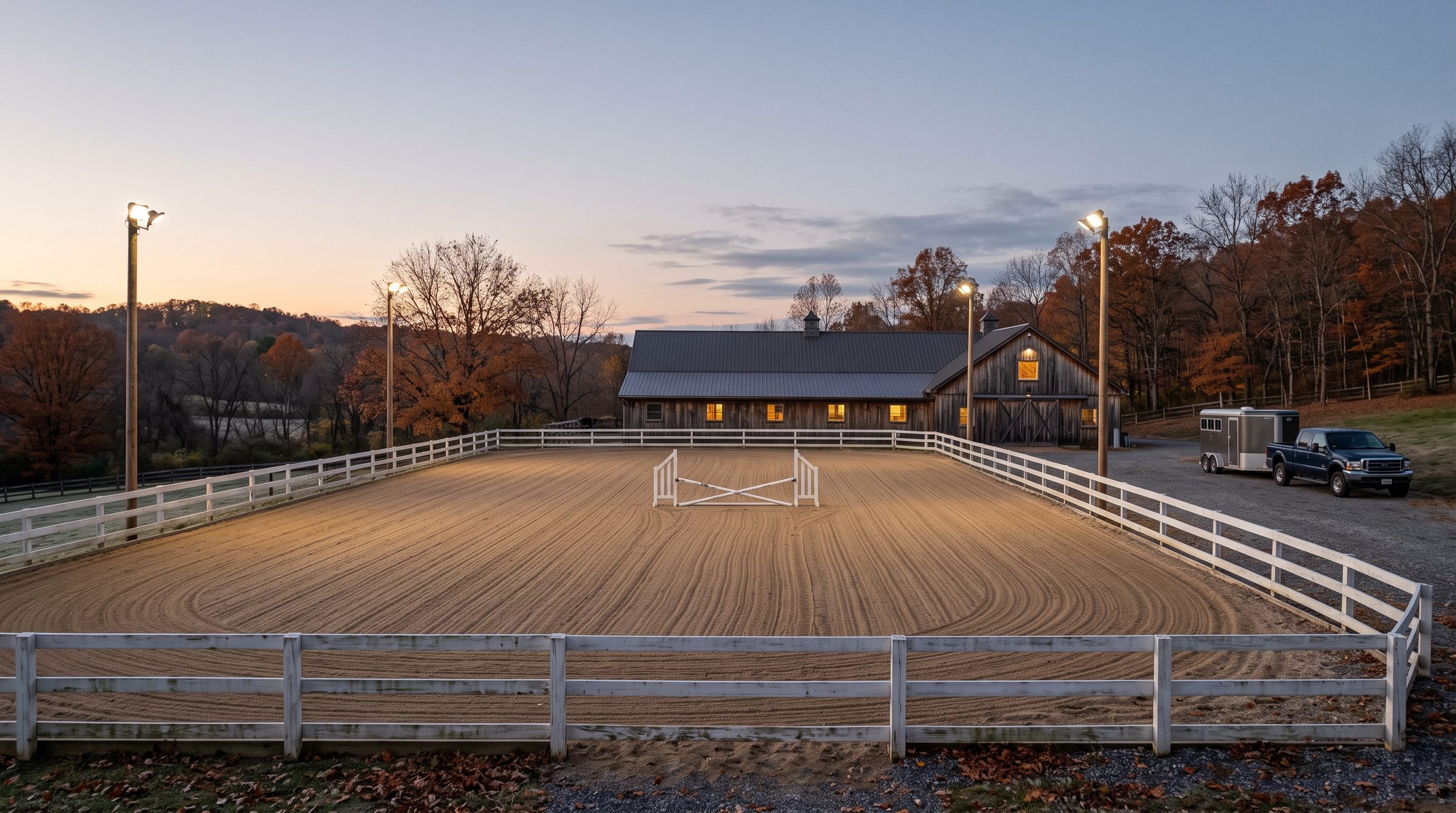
- Arena: £90,000 over 20 years is £4,500 a year.
- Tractor and machines: £28,000 over 10 years is £2,800 a year.
That's £17,300 a year, or about £120 a horse a month. If you rent the yard, the rent goes in the bills instead. Paying off a loan? Put the interest in the bills too.
Profit on top, then VAT
Covering your costs is breaking even, not running a business. You need a margin for empty boxes, a bad hay year and the next roof. We use 20% on top of every cost, your work included.
VAT comes last. If you're VAT registered, full livery is usually standard-rated, so you add 20%. If you're not, you add nothing. Your accountant will know which applies.
A worked example
Here's the 12-horse yard above. The numbers are examples, not a guide to what yards charge. Put in your own.
| Line | A horse a month |
|---|---|
| Hay, hard feed and bedding | £120 |
| Yard bills | £70 |
| Buildings and machines | £120 |
| Work: 122 hours at £18.50, over 12 horses | £188 |
| Costs | £498 |
| Profit, 20%, rounded up | £102 |
| Price before VAT | £600 |
| VAT at 20%, if registered | £120 |
| Price with VAT | £720 |
UK yards often quote by the week: £600 a month is about £138 a week.
Now take the work line out. The same sum gives about £375. That is the price at which your own day is worth nothing.
Price the extras on their own
Keep the livery price for what every horse gets. Anything only some owners want goes on a price list: holding for the farrier, rugging, the horse walker, clipping. Price each one the same way: the minutes it takes at your hourly rate, plus anything you buy for it.
Fifteen minutes of rugging a day is about 7.6 hours a month, or £140 at £18.50 an hour.
Raise the price on a schedule
Costs rise every year, and so should the price. LEL's advice: review it every year, and change it at least every three. Raise it for all owners at once, in writing, with the reasons. A small rise on a known date is easier to accept than a big one after five quiet years.
Do the sum in two minutes
Our free livery price calculator does all of this. Type in your horses, your hours a day and what an hour is worth, and open the costs to enter them the way you buy them. You get the price, your work's share of it, and a PDF and an Excel sheet to keep or show your owners. No sign-up needed.
Once you have your price, Nose charges it to each horse on its own billing day, works out part months, and adds the extras as you log them. It's free to start, no card.