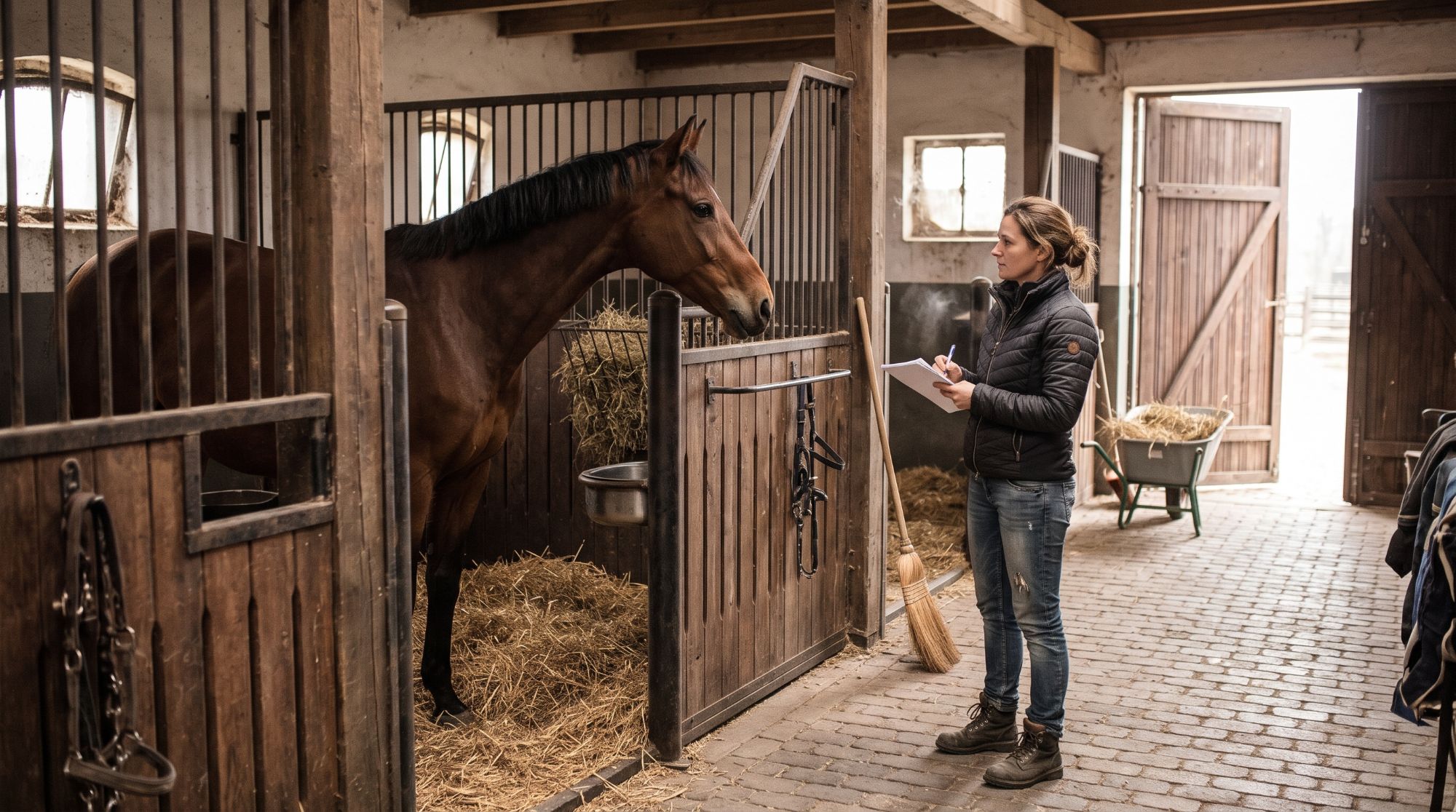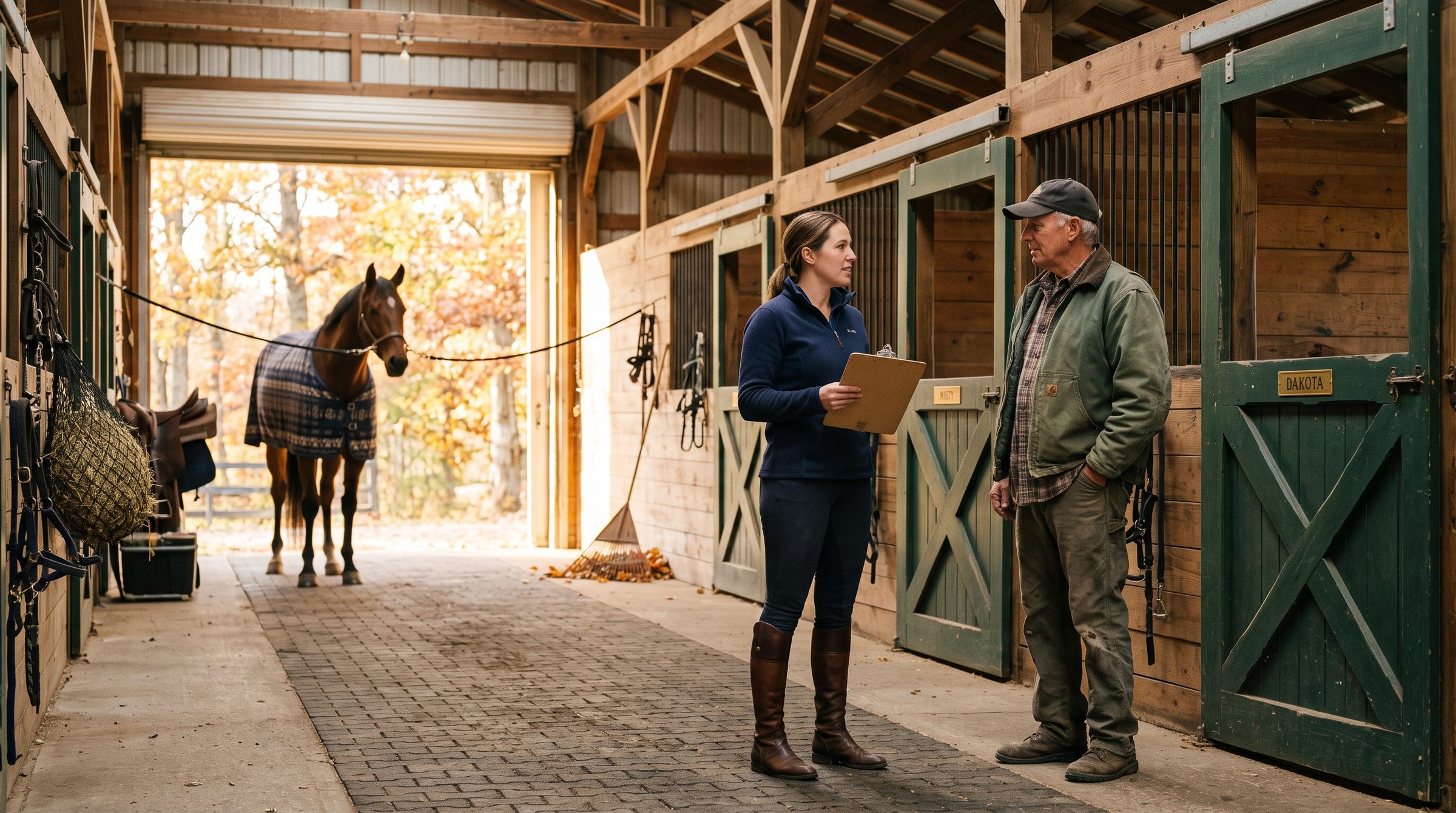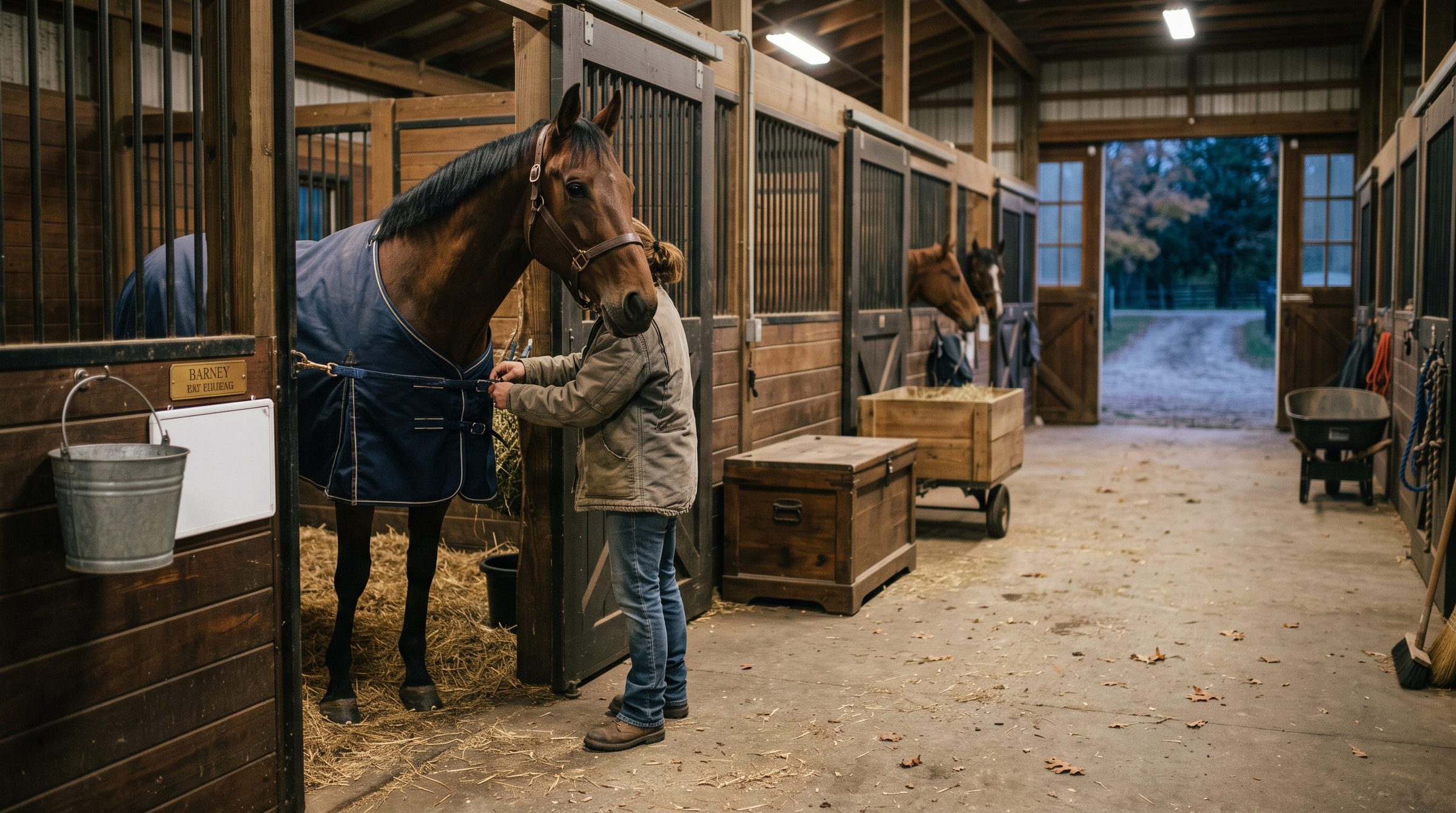
It's the last evening of the month. The horses are fed, the aisle is swept, and you sit down to do the board bills. The board itself is easy: it's the same number as last month. The hard part is everything around it. Who had their rug changed every night this week?
TL;DR
A board bill is two things: the board you agreed once, and the extras that happen all month. Agree the board and its price list in writing, log every extra on the day it happens (not on the 31st), give owners one place to ask for extras, and send a bill they can read line by line.
What goes into a board bill
Start with the part that doesn't change. Whatever kind of board you offer, write down what it includes and give the owner a copy. "Full board" means different things at different stables. One stable includes rugging; another bills it from October to March. The bill only goes wrong when the two of you remember the agreement differently.
A short checklist for each kind of board:
- The monthly price, and the day it's due.
- What's included: feed, forage, turnout, rugging, holding for the farrier and vet, fly spray, and so on.
- What's extra, with a price beside each item. A posted price list ends most billing conversations before they start, and lets you say yes on the spot.
- Decide whether each is billed per time (holding for the farrier), per day (hand-walking) or per month (rugging all winter).
Then the extras. Here's a sample November bill for one horse on full board. The figures are examples, not a benchmark: board and extras vary a lot by region and by what's included. Not sure what to charge for the board itself? Work it out in our free calculator.
| Line | Qty | Price | Amount |
|---|---|---|---|
| Full board, November | 1 | $900.00 | $900.00 |
| Rugging, November | 1 | $50.00 | $50.00 |
| Feeding owner-supplied supplements, November | 1 | $25.00 | $25.00 |
| Held for the farrier, Nov 6 | 1 | $10.00 | $10.00 |
| Hand-walking on box rest, Nov 15–21 | 7 days | $10.00 | $70.00 |
| Total | $1,055.00 |
Every extra line carries a date or a period. That's what makes a bill easy to accept: the owner sees what happened and when, without asking.
Extras: write them down as they happen
Extras are where money goes missing. You hold a horse for the farrier at 7:30 in the morning. By the 31st, nobody remembers which horses he did.
Log it the same day, in one place. A notebook in the tack room works, as long as it's the only notebook.
Letting owners ask from their phone
Owners want extras. They text you at 9 PM asking if someone can bring their horse in before the storm. You say yes, and then that yes has to travel from your phone to the stable and on to the bill.
Give them one way to ask, with the price visible when they ask. Then the request, the work and the charge are one record, and nobody retypes anything.
That's how we built it in Nose. You keep your extras in Settings → Services & price list, each with its price and how it bills. On any service an owner may ask for, you turn on Owners can request this service.
From then on, an owner opens My horse on their phone and taps Request a service. They pick the horse, the service, a date and how many, then tap Send request.
An admin sees the request in Requests and can Accept or Decline it. An accepted request shows up on the Care board, marked From owner. When the work is done, press Done. If the service is billable, the charge is raised right there, with its due date.
Month-end without the chase
Before the first bill goes out, decide a few rules once:
- The billing day. Pick one day and keep it.
- In advance or in arrears. Either works; switching back and forth doesn't.
- Part months. Pro-rata by days is the fairest rule, and the easiest to explain.
- When a bill is overdue. Pick the number of days, and say it out loud.
In Nose, each boarded horse has a contract on the Boarding page. A Billing preview shows exactly what will be charged and when, before you save anything. Once the contract is active, the board charge for each month is generated on its own. Per-time and per-day extras are charged the moment the work is logged.
The owner who pays sees the same numbers you do on My horse: To pay, the Next payment and its date, and the full Charge history.
The Boarding list shows each contract's open amount, with a "days overdue" marker on late ones. So the month-end question changes from "what did everyone use?" to "who still needs a nudge?"
The help centre has the details: plans, contracts and charges for the stable, and the owner portal for your boarders.
You didn't open a boarding stable to chase rug changes on the 31st. We built Nose so the extras are written down as they happen, and the month adds itself up. You can look around at nose.horse. It's free to start, no card.